The lifetime warranty stops at the border
A lifetime optics warranty tells a Canadian buyer very little until the dealer names the service route.

Gear. A Canadian shooter says his riflescope reached its first range trip before the elevation turret stopped the day.
The owner wrote on r/canadaguns that the turret would not move after one shot. He says Crimson Trace customer service asked for a receipt and could not handle the warranty claim once he gave a Canadian shipping address. The post does not name the scope model. Holdover has not inspected the optic or heard the call.
That remains one owner's account. The manufacturer's public warranty terms are available to everyone.
One current Crimson Trace Hardline riflescope page says all Crimson Trace scopes are covered by a full lifetime warranty. The company's published Limited Lifetime Warranty then adds the conditions that matter in Canada. It covers the original owner, requires a new purchase from Crimson Trace or an authorized retailer, and requires valid proof of purchase such as a dated sales receipt. The same terms say the warranty is valid only for residents of the United States. Residents of other countries are directed to a local authorized Crimson Trace dealer or Crimson Trace Customer Service for assistance.
Lifetime sounds long enough to stop reading. The Canadian buyer still needs a dealer, a receipt, and a return address.
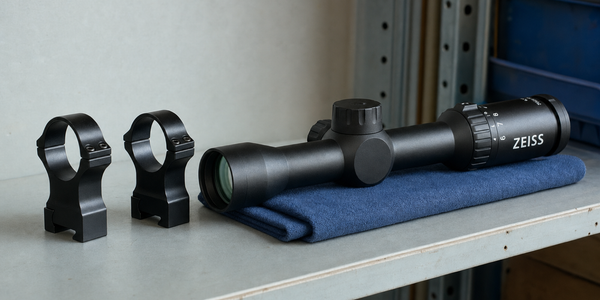
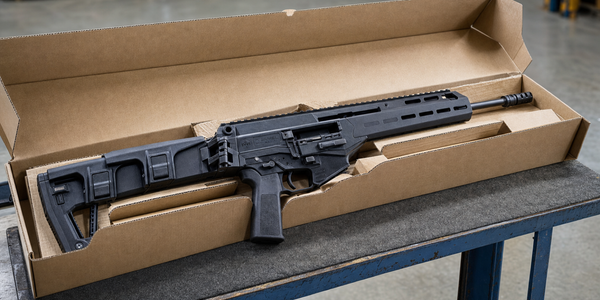
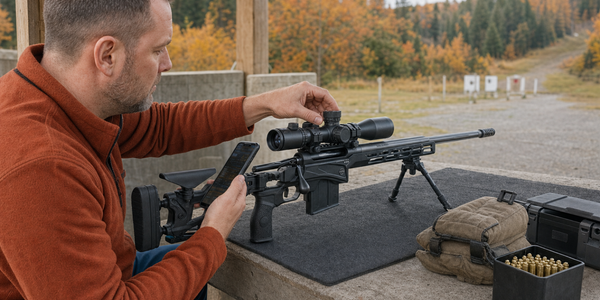
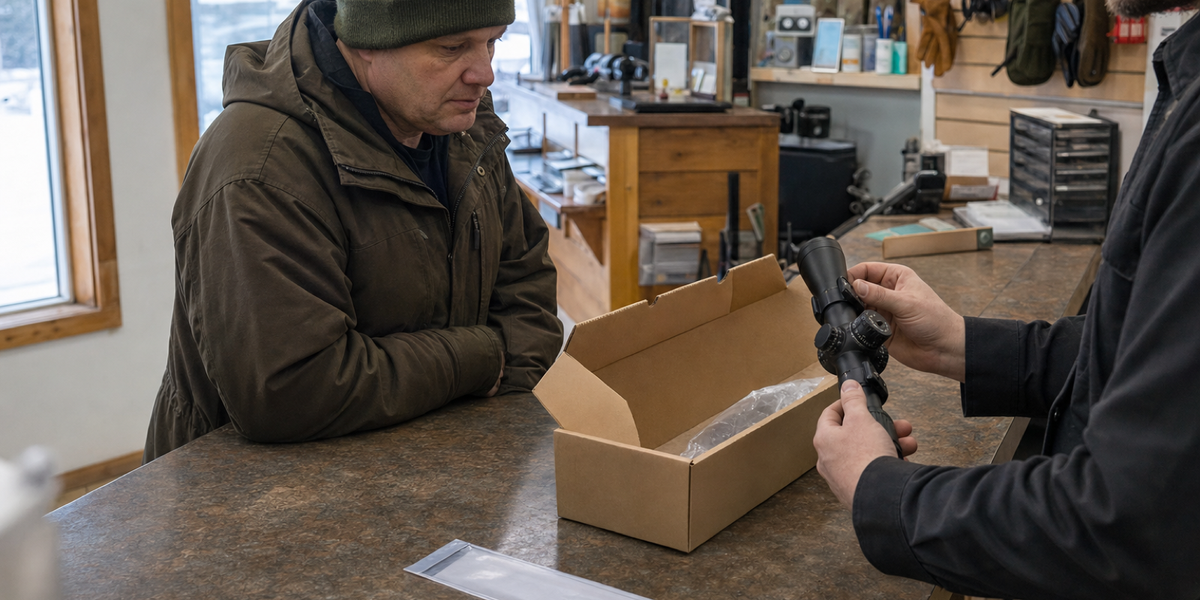
Holdover produced the feature as a fictional optics-service scene. The people, scope, dealer, carton, and receipt do not depict the Reddit owner, an actual claim, or a named product.
Duration is only one warranty term
A warranty headline answers how long a promise may last for an eligible product and owner. It says little about geography, evidence, shipping, or who will put the optic on a service bench.
Those smaller lines can change the value of the scope.
If the manufacturer accepts Canadian claims directly, the route is fairly clear. If the published manufacturer warranty is restricted to U.S. residents, the Canadian retailer or distributor becomes part of the product. The buyer needs to know whether that company performs the repair, exchanges the optic, sends it across the border, or asks the owner to deal with the manufacturer.
The Crimson Trace terms preserve an assistance route for customers outside the United States. They direct those customers to the local authorized dealer or customer service. Assistance and warranty coverage are different words, however, and the practical outcome depends on the actual Canadian channel.
That channel deserves the same attention as glass, turret travel, reticle, and price.
I have a concrete comparison in my own cabinet. In June, Vortex Canada completed service on my Razor HD Gen II and shipped a same-model replacement. The useful fact here is the route: a Canadian service organization handled the optic and produced a recorded outcome. That belongs on a shortlist beside the optical specifications.
That extends the buying order in Buy the scope that teaches. Repeatability still matters. The Canadian service channel determines what happens when repeatability disappears.
Ask the dealer five questions
A Canadian retailer saying "lifetime warranty" should be able to explain the next step without improvising at the returns counter.
Ask these questions before paying:
- Who receives a defective optic in Canada?
- Is the claim handled by this store, a Canadian distributor, or the manufacturer?
- Which proof of purchase starts the claim?
- Who pays shipping, inspection, brokerage, and return costs?
- What happens if the store or distributor relationship changes?
Get the answer in writing when the service path affects the purchase. A short email from the retailer is more useful than a confident sentence beside the display case. Save the product page and warranty terms too. Web pages change, distributors change, and the person at the counter may be working somewhere else when the erector system finally has an opinion.
This check matters most when two scopes are close on performance and price. The model with a clear Canadian service route may be the better value even if the other box carries the larger warranty word.
Keep the receipt with the optic record
The current Crimson Trace terms require valid proof of purchase. The Reddit owner says his receipt was lost after life and a basement flood got in the way. That is ordinary enough to be useful.
Paper receipts fade. Email gets buried. Retailer accounts disappear. A simple optic record prevents all three from becoming the same problem.
Keep a digital copy of the dated receipt, retailer name, exact model, serial number, purchase date, and the warranty terms that applied at purchase. Store the record somewhere separate from the scope box. Keep the original packaging until the first inspection and range checks are complete.
The serial number stays private. It belongs in the owner's record and any legitimate service claim, not in a forum photograph.
Test the service promise early
A new optic should not spend six months in the box before its first useful check.
Read the manual. Confirm the model and included parts. Inspect the exterior, look through the glass, and confirm that each control moves as the manual describes before the range trip. Mount it to the published ring and base specifications. If a control is locked, gritty, or clearly wrong, stop and call the dealer. Forcing a turret is a poor warranty strategy.
Newer shooters can use Holdover's MOA/MIL Scope Adjustment Calculator to check what one click should change before recording the first adjustment test. The wider Holdover tools library keeps the arithmetic separate from the service record.
At the range, zero the optic and exercise the adjustments early enough to reveal a problem while the retailer's return window is still relevant. A precision optic should eventually prove that its adjustments move predictably and return to the starting point. Record the result instead of trusting the feeling of the clicks.
This first-week work does not prove a scope will last for years. It does give a dead control, obvious tracking fault, or assembly problem the shortest possible route back to the seller.
Buy the service path
The current owner account is a warning rather than a verdict on an unnamed scope. The published terms carry the broader lesson.
Canadian shooters already compare magnification, reticle, weight, tracking, and price. Add the service path. Ask who takes the product back, which document opens the claim, and where the parcel goes.
Buy the glass. Keep the receipt. Know the counter that will take it back.
Sources
- Reddit, r/canadaguns, Warning: Crimson Trace warranty is a scam in Canada or anywhere else outside of the US, accessed July 31, 2026.
- Crimson Trace, Hardline 4-16x42 BDC Long Range riflescope, accessed July 31, 2026.
- Crimson Trace, Limited Lifetime Warranty, accessed July 31, 2026.
- Crimson Trace, Warranty, accessed July 31, 2026.
- Crimson Trace, FAQs and contact support, accessed July 31, 2026.
Shortlist the rifle before the checkout page.
If this piece helped you narrow the rifle question, keep the tradeoffs visible before the next tab becomes a shopping cart.
Use the Holdover Rifle Cartridge Shortlist Card to compare use case, distance, recoil, ammunition availability, rifle fit, optics plan, budget, and what you will actually practice.
Safety note: the card is a planning worksheet, not buying advice, legal advice, hunting guidance, load data, or a substitute for current manufacturer, range, provincial, federal, or qualified-instructor guidance.