The rifle is not the *scandal*
A current Global News story about Cadex rifles in Russia should make Canadian shooters proud of the gear and much less patient with policy aimed at the wrong people.

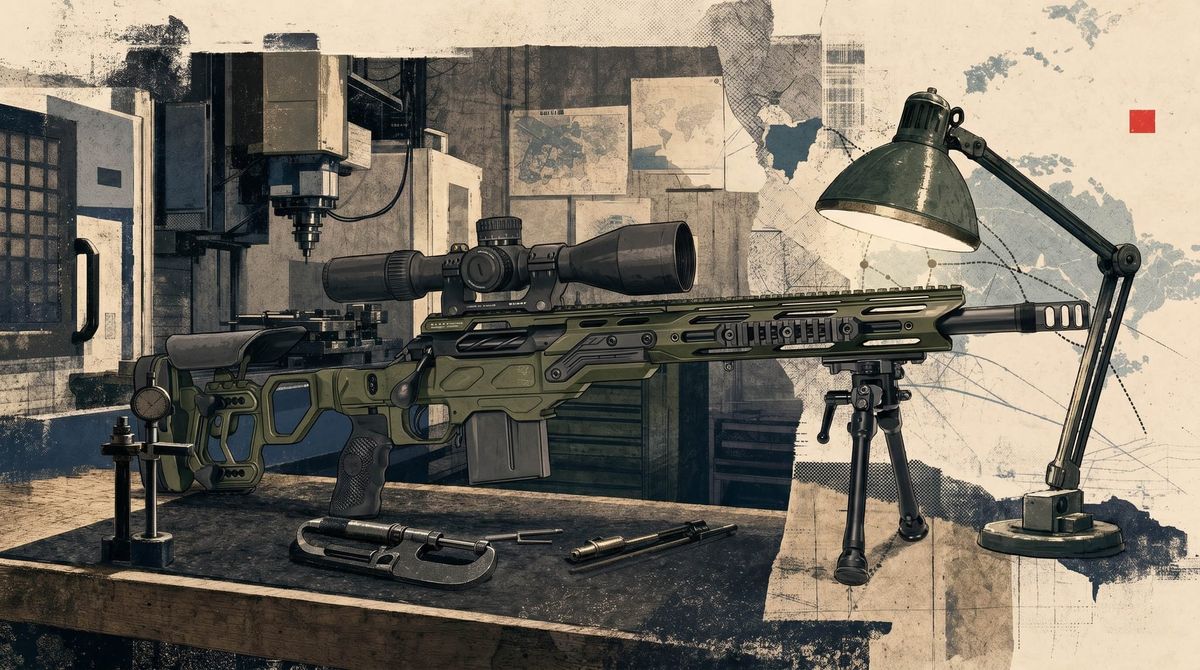
Opinion. The rifle is not the scandal.
That is the first thing Canadian shooters should say out loud about the May 12 Global News story reporting that CSIS visited Cadex Defence after Canadian-made precision rifles appeared in Russia.
The second thing is less comfortable: Canada builds rifles good enough that hostile states and their buyers want them. That should not surprise anyone who has handled serious Canadian precision gear, but it does make the policy question sharper. If the route is dirty, investigate the route. If the export control system is being gamed through third countries, tighten the system. If battlefield capture is part of the answer, say that clearly and build the tracking around it.
Do not pretend the problem is the Canadian owner who takes a rifle to a range, logs his data, reloads his ammunition, and lives under a licensing regime that already knows where to find him.
Good rifles are not the scandal.
Bad routes are.
A good rifle is not a confession
Global News reported that Canadian intelligence officers visited the Quebec company after earlier reporting showed Cadex rifles for sale in Moscow and in the hands of Russian snipers. Cadex president Serge Dextraze told Global News the company did not export its products to Russia, and that CSIS had met with the company several times to discuss Russia's efforts to evade sanctions.
That distinction matters.
Cadex is not a sketchy foreign mail-order parts bin. It is a Canadian manufacturer south of Montreal that lists CDX precision rifles, rifle chassis, weapon accessories, military and law-enforcement customers, and a pile of compliance infrastructure that would make most small businesses consider selling candles instead. Its own materials list control-goods certification, export and import control bureau coverage, Canadian security clearance, in-house tracking and quality control, and ISO 9001 certification.
That is not proof of perfection. No system is perfect. It is proof that this is not the domestic problem politicians like to describe when they talk about firearms.
I have a soft spot for Cadex because my own safe has more Cadex than any reasonable spreadsheet would recommend: a CDX-SS Seven S.T.A.R.S. Covert in .308 Win, a CDX-R7 LCP in 6.5 Creedmoor, a CDX-300 Tac in .300 PRC, a CDX-R7 XS in .300 Win Mag, a CDX-33 Lite in .338 Lapua Magnum, and a 7mm PRC R7 barrel action sitting in an MDT chassis for ongoing load development.
That is not a military procurement pipeline. It is a very expensive way to learn wind calls, seating depth, recoil management, and humility.
The rifles are not magic. They are just good. Heavy where they need to be, stiff where it matters, built for cartridges that punish casual setup, and generally too honest to blame when the group opens up. The thing about serious precision rifles is that they do not leave much room for romance. The target records the work. The chronograph tells on you. The brass tells on your process. The invoice tells on your judgement.
So when a Canadian precision rifle appears in the wrong place, the serious response is not moral panic about the object. It is route discipline.
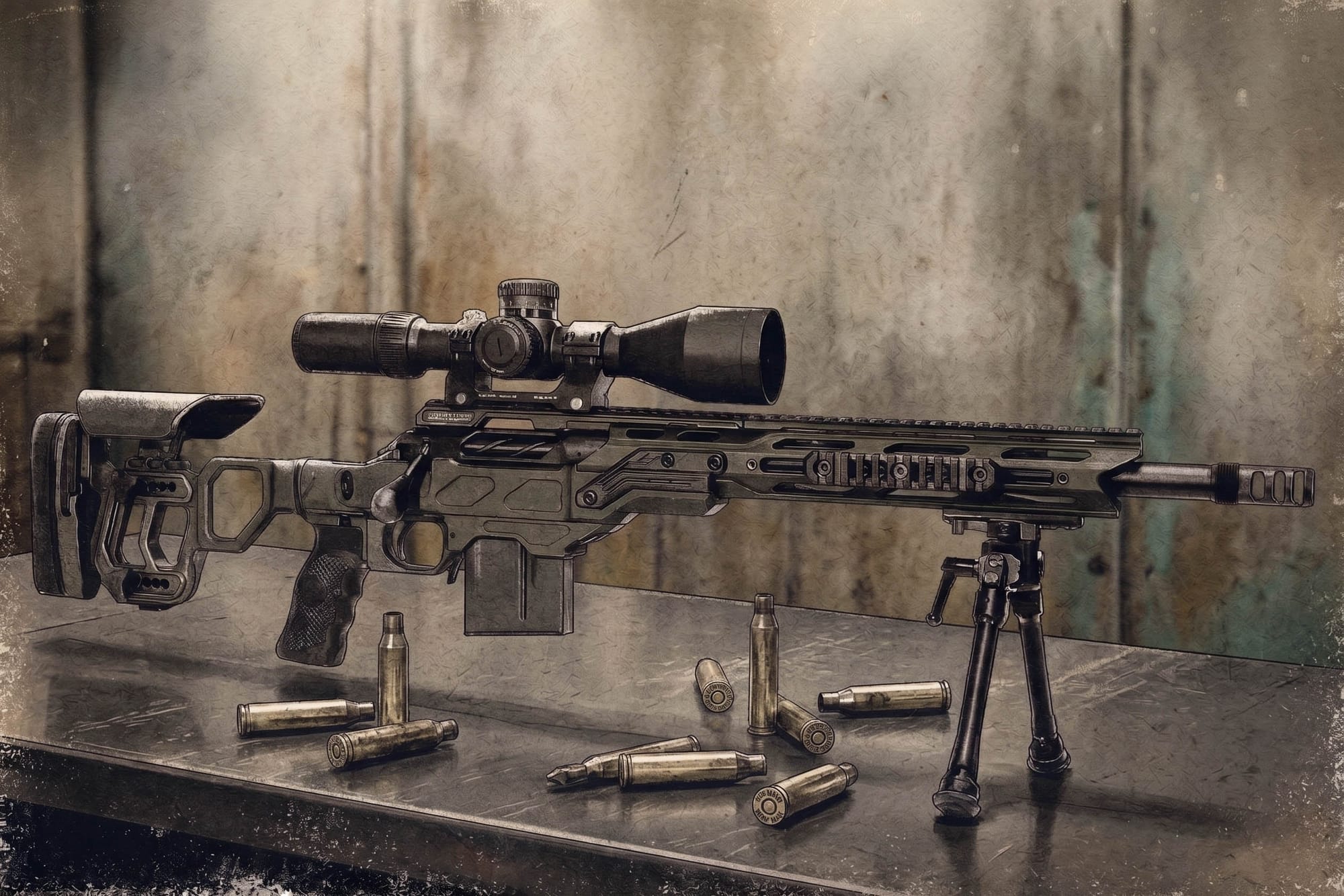
The route is the file
Canada's Russia sanctions are not ambiguous on the broad point. Section 3.13 of the Special Economic Measures (Russia) Regulations prohibits people in Canada, and Canadians outside Canada, from exporting, selling, supplying, or shipping arms and related material to Russia or to anyone in Russia. It also prohibits financial, technical, or other services related to the sale, supply, transfer, manufacture, maintenance, or use of arms and related material.
That is the law.
CSIS' 2025 public report says Russia maintained both the capability and intent to procure sanctioned and export-controlled technology from the West, including Canada. It specifically names Canadian precision firearms alongside microelectronics and satellite communications technology. It also says CSIS worked with manufacturers, exporters, government partners, and foreign partners to identify how Canadian goods were being acquired and shipped to Russia, and to stop them before they arrived.
That is the file.
Global Affairs briefing material from February is even more direct. Under a section on alleged diversion of Canadian technology to Russia, the department said Canada maintains a presumptive denial policy on the export and brokering of controlled goods and technology to Russia. It also said no export or brokering permit had been issued for Russia-destined items, apart from one permit in 2013. As for Cadex rifles in Russian hands, the briefing identified possible routes: battlefield loss from Ukrainian forces supplied with some Cadex rifles, or illicit acquisition through third countries.
Possible is the important word.
The route is not proven just because a rifle is photographed in the wrong place. A captured rifle is not an export failure in the same sense as a grey-market diversion. A third-country acquisition is not the same fact pattern as a direct sale. A Moscow retailer listing rifles as in stock is evidence worth investigating, not permission for the rest of us to start filling in gaps with whatever rumour best flatters our politics.
This is where firearms debate usually gets stupid.
The object becomes the argument. The rifle is good, therefore the manufacturer must be blamed. The rifle is scary, therefore the civilian owner must be squeezed. The rifle is Canadian, therefore some domestic policy slogan must be refreshed and sent back into the world with a minister's signature on it.
No.
The route is the argument. Who bought it? Under what permit? From which country? Through which intermediary? Was it captured? Was it re-exported? Was it brokered through a jurisdiction Canada already treats as high risk? Did anyone falsify end-use documents? Did anyone ignore red flags? Did any Canadian law get broken, or did the failure happen after the item left Canada's lawful control?
Those are adult questions.
They are also harder than writing another press release about licensed owners.
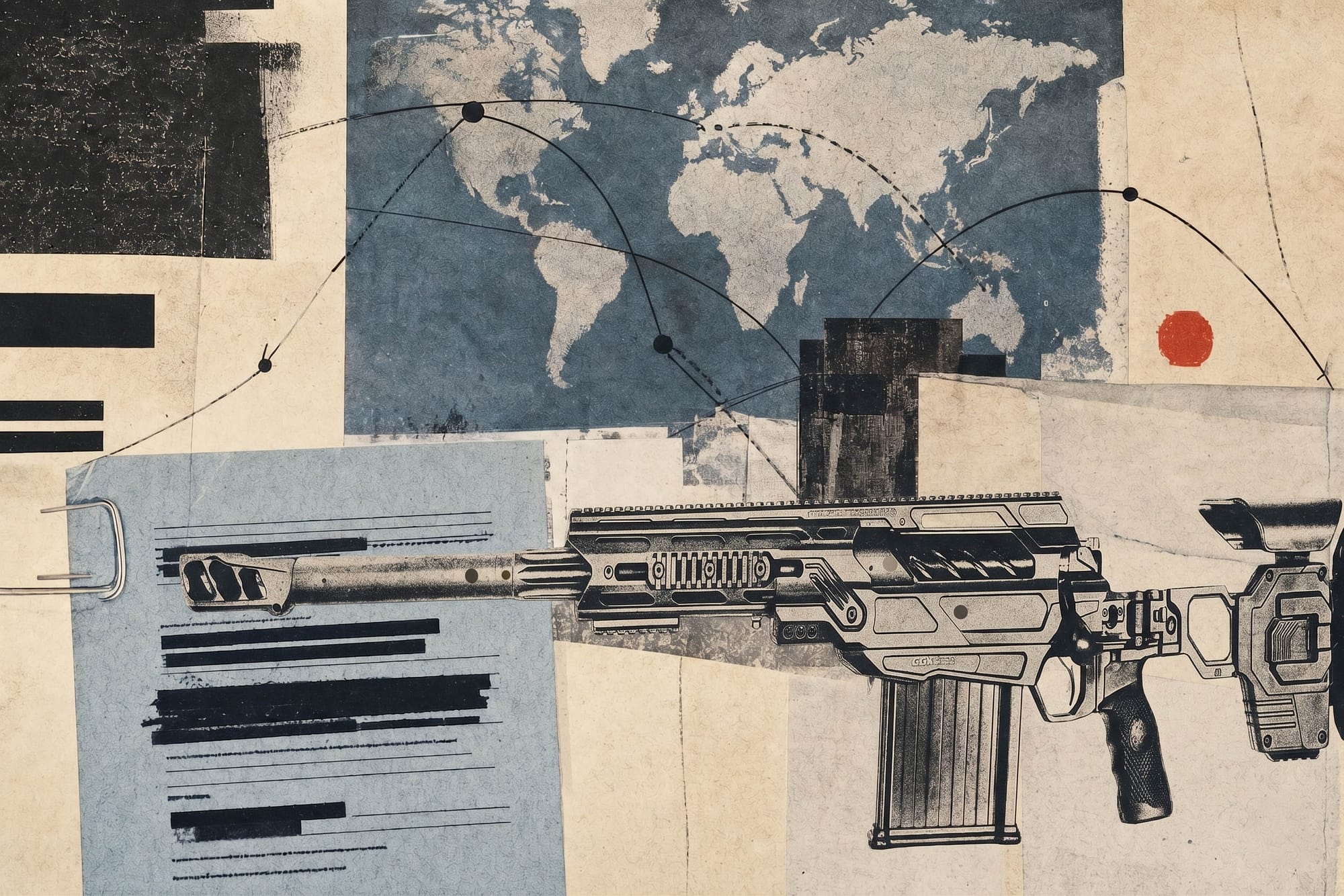
The easy target is still easy
Canada has spent the better part of six years treating lawful domestic ownership as the cleanest political surface to write on.
That is why the Cadex story deserves a careful read. It exposes the difference between an easy target and the right target.
The licensed Canadian owner is easy. He has a PAL or RPAL. He has a renewal date. He has a traceable purchase history where the law requires one. If the firearm is restricted or prohibited, the state has registration records. Even non-restricted transfers now require a seller to confirm, through the Registrar, that the buyer holds and remains eligible to hold the correct licence class before the transfer proceeds.
The export-diversion world is not easy.
It involves brokers, end users, shell companies, allied supply chains, captured equipment, third countries, resale markets, forged documents, dual-use goods, sanctions screens, intelligence briefings, and people whose whole job is to make a clean line look clean until the last possible moment.
That is where serious enforcement belongs. Not because civilian ownership should be exempt from law. It should not be, and in Canada it very obviously is not. Serious enforcement belongs there because that is where the problem is.
There is a Canadian policy habit of mistaking visibility for causality. Licensed owners are visible, so they become administratively useful. Manufacturers with real addresses, licences, certifications, and compliance staff are visible, so they become easier to question than the grey-market path that may have moved a rifle after it left the clean system. Retailers and clubs are visible. Range members are visible. Importers are visible.
The person moving controlled goods through a third country is trying very hard not to be.
That is the job. Find him.
The new shooter lesson
For newer shooters, the Cadex story is a good test of source literacy.
Read the headline. Then separate the actors.
There is the manufacturer. There is the rifle. There is the lawful Canadian owner. There is the foreign military user. There is the export-control regime. There is the possible battlefield-capture route. There is the possible third-country diversion route. There is the intelligence agency trying to help Canadian companies spot the pattern. There is the government asked to explain what it has learned. Those are not the same thing.
If you collapse them into one emotional blob called "guns," you have already lost the plot.
This matters even if you will never own a Cadex and never shoot past 100 metres. It matters because almost every firearms story in Canada asks you to make the same mistake. Something bad happens somewhere. A firearm is involved. The policy discussion drifts toward the easiest regulated population, because that population is already standing under the fluorescent lights with its paperwork out.
The better habit is to ask where the lawful system stopped and where the bad route began.
That habit will serve you at the counter, in the club, and in politics. A retailer description is not the law. A forum thread is not an export-control briefing. A minister's sentence is not evidence. A Global News report is a source, not a verdict. A government page is stronger on the legal framework, but still needs to be read carefully. A rifle in the wrong hands is a serious fact, but not a complete chain of custody.
Source literacy is not glamorous. Neither is annealing brass.
Both keep expensive things from going sideways.
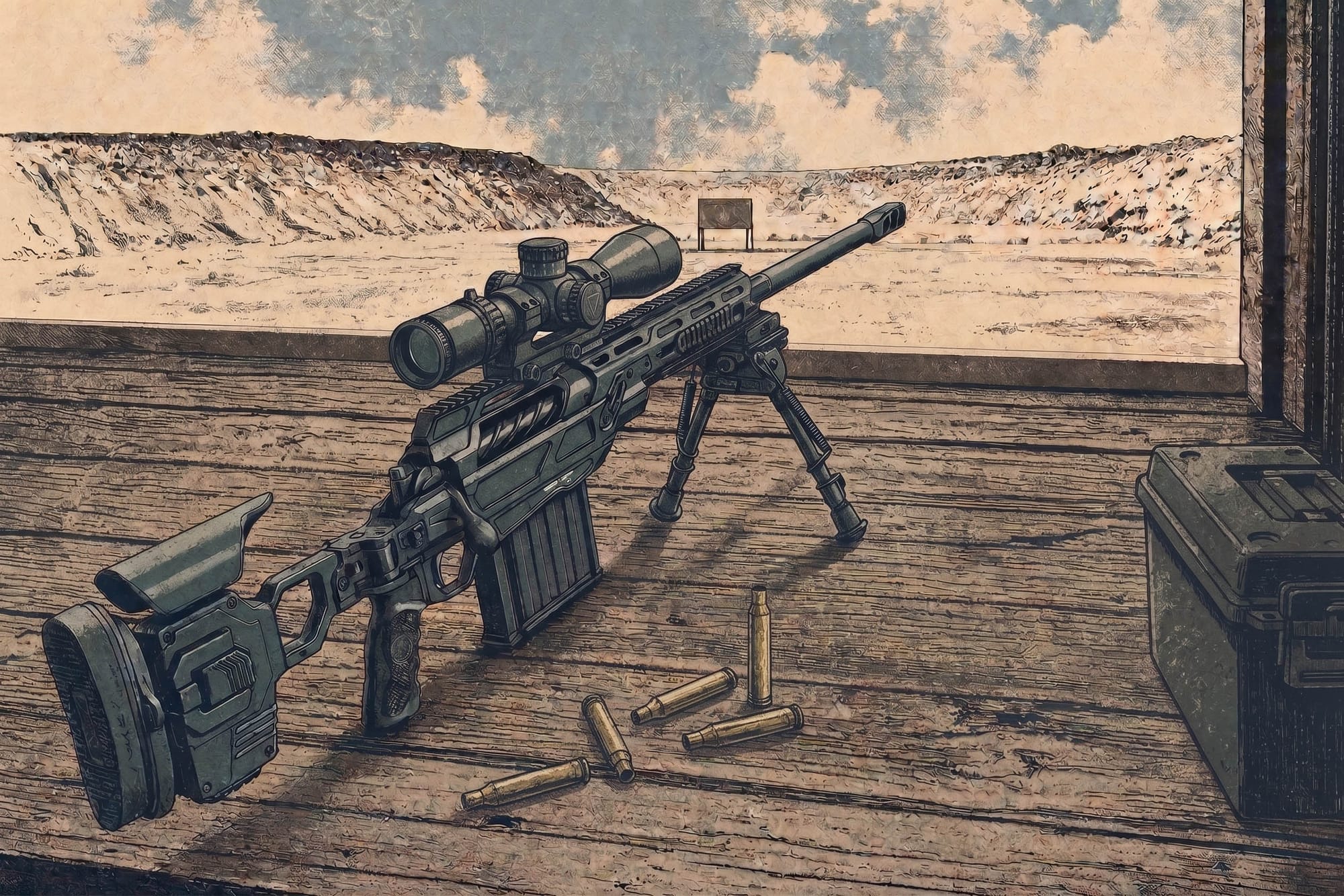
Serious gear deserves serious policy
The strongest version of the other argument is straightforward: Canadian-made precision rifles showing up in Russia is a national-security concern, and manufacturers of military-capable equipment should be held to a very high export-control standard.
Agreed.
That is not a concession. It is the starting point for a serious pro-ownership argument. Lawful ownership does not require pretending export controls are optional. Canadian precision manufacturing is valuable because it is good. Good things require competent protection.
The difference is aim.
If a Canadian company violated sanctions, prove it and act. If an intermediary diverted controlled goods, find the intermediary. If allied shipments to Ukraine are being captured and reused by Russia, say that honestly and improve tracking where possible. If third-country brokers are laundering end users through friendly paperwork, make that the enforcement priority.
But do not turn a sanctions-diversion story into another lazy domestic morality play.
Canada's lawful firearms community is not an unregulated blind spot. It is one of the most regulated hobby and sporting populations in the country. The owner is trained, licensed, continuously screened, rule-bound, and increasingly boxed in by policies that are often easier to administer than to justify. The domestic manufacturer is licensed, inspected, certified, and reachable. The club has rules. The range has records. The retailer has a ledger. The owner has a safe and a renewal date.
The gap is somewhere else.
That should matter to people who do not care about guns at all. If a government says the issue is national security, then the response should look like national security: intelligence, export controls, broker enforcement, end-use verification, sanctions compliance, and pressure on the jurisdictions and intermediaries that actually move goods into hostile hands.
It should not look like another attempt to squeeze the lawful Canadian side of the equation because that side answers the phone.
The Cadex story is uncomfortable because it contains two truths at once.
Canada makes world-class precision rifles.
Canada also has to keep world-class precision rifles out of the hands of people under sanctions.
Both can be true. Both should be true. A serious country should be able to protect serious manufacturing without pretending lawful owners are the leak.
If the route is the problem, aim at the route.
Good rifles are not the scandal. Bad routes are.
Sources
- Stewart Bell, Global News, "Canadian intelligence officers visit Quebec company after sniper rifles turn up in Russia," posted May 12, 2026: https://globalnews.ca/news/11841340/csis-quebec-sniper-rifles-russia/
- CSIS, 2025 Public Report, "Operations and analysis," Russia procurement and Canadian precision firearms: https://www.canada.ca/en/security-intelligence-service/corporate/publications/csis-public-report-2025/operations-and-analysis.html
- Special Economic Measures (Russia) Regulations, section 3.13, arms and related material: https://laws-lois.justice.gc.ca/eng/regulations/SOR-2014-58/section-3.13.html
- Global Affairs Canada, FAAE briefing material, February 3, 2026, alleged diversion of Canadian technology to Russia: https://international.canada.ca/en/global-affairs/corporate/transparency/briefing-documents/parliamentary-committee/2026-02-03-faae
- Cadex Defence, About us and certification information: https://www.cadexdefence.com/about-us-cadex/
- Stewart Bell, Global News, "Russian snipers are using Canadian rifles, despite sanctions," posted October 29, 2025: https://globalnews.ca/news/11485001/russian-snipers-canadian-rifles-sanctions/
Keep the source trail in one place.
If this piece sent you back to government pages, keep the official links, page dates, and follow-up notes together.
Use the Holdover Canadian Firearms Policy Source Tracker to record the current Public Safety, RCMP, Canada Gazette, and Justice source pages behind buyback, OIC, classification, compensation, and amnesty claims.
Safety note: the tracker is a worksheet for source hygiene, not legal advice or a substitute for current official guidance.
Get the tracker through The Dispatch
Source trail refreshed
This article was refreshed for accessibility and source discovery on 2026-05-21. The opinion has not been rewritten; this block keeps the source trail easier to inspect.
Primary source trail
- Global News Cadex/CSIS report
- CSIS Public Report 2025 - Operations and analysis
- Special Economic Measures (Russia) Regulations section 3.13
- Global Affairs Canada committee briefing material
- Cadex Defence about page
- Global News Russian snipers/Canadian rifles sanctions report