
Why I sold my *Canadian Starter Kit*.
The Canadian Starter Kit - 10/22, SKS, pump 12-gauge - is what every new PAL holder gets told to buy. It cost me close to $1,800, taught me a few genuinely useful things, and sold before I bought the 338 Lapua that actually fits.

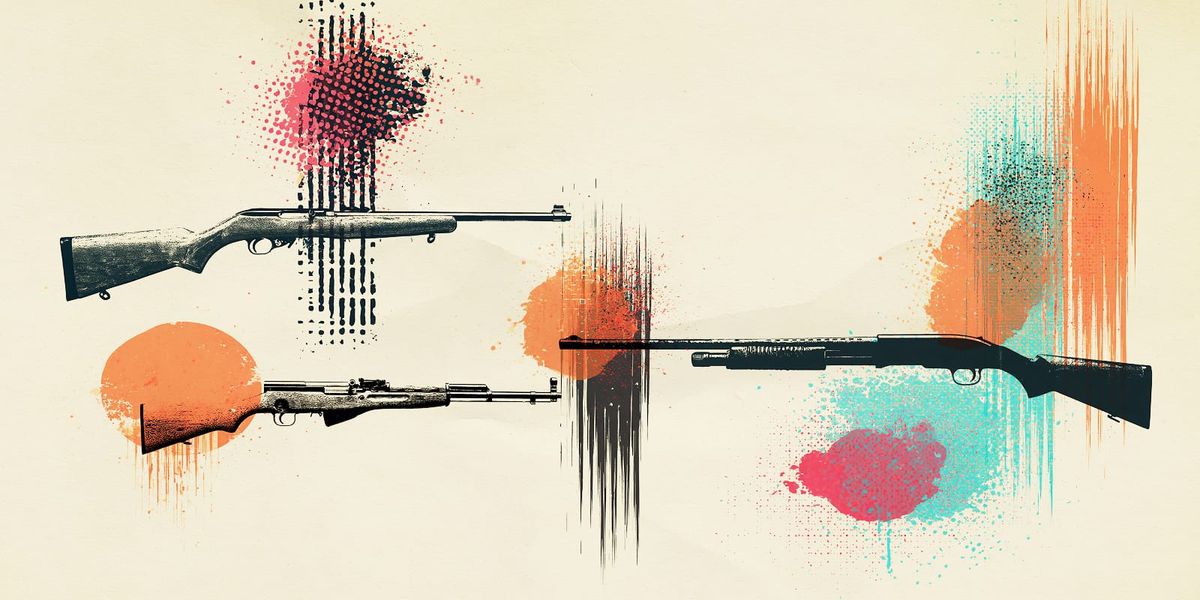
If you're new to firearms in Canada, you will hear about a specific three-gun kit within your first week on the forums. A Ruger 10/22. An SKS. A pump-action 12-gauge, usually a Mossberg 500 or a Remington 870. Different people call it different things. The name that has stuck, more or less, is the Canadian Starter Kit.
It is not a rule. It is not in the CFSC or CRFSC curriculum. It is not in any RCMP publication. It is a consensus answer the community has given, over roughly twenty years of forum culture, to a question every new PAL holder asks: what should I buy first?
The Canadian Starter Kit, by the numbersFig. 01 · By the numbers
The Canadian Starter Kit, priced against its alternative.
Three firearms, one consensus answer. Fifteen years ago the kit was a budget argument. In April 2026 it costs within shouting distance of a respectable bolt-action chassis. Toggle the columns below to see the drift.
c. 2011 ThenApril 2026 NowApril 2026 Bolt-action alt.ScenarioThe kit, todayKit total, used$1,450–$2,050 CAD$0 $500 $1,000 $1,500 $2,000 $2,500
The kit once cost less than one quality bolt-action. It now costs close to two. Considered as a budget argument, it no longer is one.
Ottawa · 45.4 N · April 2026 Source · GunPost listings, retailer observation · Bass Pro CA, Cabela's CA
I bought the Canadian Starter Kit. I sold the Canadian Starter Kit. Somewhere in the middle, I figured out what kind of shooter I actually am. This is what I would tell my year-one self if I could. It is also, I hope, useful if you are currently year one.
What the kit actually is
The Canadian Starter Kit exists because, for a long time, it answered a real question with a reasonable set of guns. It gave a new PAL holder something to do at the range, something to take to the farm, and something to keep for clays or hunting, all without spending much money and all legal to transport anywhere a non-restricted firearm can go.
The kit optimizes for four things.
Budget: three firearms that used to cost less, combined, than a mid-tier bolt-action.
Versatility: a rimfire for cheap range days, a centre-fire semi for paper at 100, and a shotgun that covers clays, upland, and waterfowl on one receiver.
Canadian legality: all three non-restricted, no ATT required, transportable to crown land, a friend's farm, or a trap club without paperwork.
Resale stability: anything you end up not using moves on GunPost or the CGN classifieds inside a week, usually at close to what you paid.
On paper, it is a sensible answer.
The paper is out of date.
The math stopped working
Here is what the kit costs used, on GunPost, in April 2026, in Canadian dollars.
- Ruger 10/22 carbine, decent condition: $450 to $550
- SKS, Russian or Yugoslav surplus (not Norinco), decent wood: $600 to $900
- Mossberg 500 or Remington 870, used 12-gauge, functional: $400 to $600
That is a kit running $1,450 to $2,050. Fifteen years ago, the same three firearms sold together for about nine hundred dollars. The SKS alone has moved from roughly $200 to somewhere between $600 and $900 in under a decade, driven by surplus scarcity, import restriction, and the fact that non-restricted centre-fire semis are a shrinking category in this country.
Meanwhile, a respectable bolt-action chassis in 308 Winchester or 6.5 Creedmoor, with a modest scope, has stayed roughly flat at $1,800 to $2,400. That is within shouting distance of what the Canadian Starter Kit now costs. Considered as a budget argument, the kit no longer is one.
Why I bought it anyway
My PAL arrived, laminated and anticlimactic, and I drove to Cabela's. I walked out with a 10/22. An SKS showed up on GunPost a few weeks later, decent wood and beat-up bluing, in early-2010s dollars. A Remington 870 came home because every reasonable poster on every Canadian forum owned one. A 20-gauge Stoeger joined the safe because I thought I might try upland birds. Then a Norinco because CGN said so. Then a couple of straight-pulls, because Canadian. Then a bolt-action or two, because the shop had them on sale.
By the end of year one I effectively owned the Canadian Starter Kit twice over, plus extras. I had also, at that point, never fired several of them. I still own an alarming number of rifles and shotguns today that I have never fired. That is not a humblebrag. It is simply what happens when you buy with enthusiasm and no plan.
The kit did teach me some real things. The 10/22 is an excellent teacher of fundamentals. It is cheap to shoot, it holds you honest, and you can spend an afternoon at the range without thinking about cost. The SKS gets you past the cost barrier into centre-fire. The pump shotgun teaches you how to mount a gun and how to move with it. These are genuine lessons and I still carry them.
What the kit did not teach me is, looking back, almost everything I ended up caring about. How to shoot at distance, meaning past the hundred metres an SKS can plink a gong at. How to read wind. How to handload. How to care about one rifle, specifically, the way a precision shooter ends up caring about their rifle. The Starter Kit firearms are capable. They do not ask much of you. I did not give them much back. After a while, I noticed.
The heresy of selling
The first rifle I sold felt illegal. Not in the regulatory sense. In the social one.
The Canadian firearms community has a well-developed forum position that says, roughly: buy, stack, never sell. The safe grows. The collection matures. Eventually you become the quiet guy at the club who knows more about milsurp Mausers than anyone else in the room. That is a fine outcome for somebody. It was not going to be mine.
I sold the 20-gauge first. It had never been fired. The 12-gauge went after that. The SKS, after one afternoon of fun, went to a new PAL holder working through his own version of this exact article. The 10/22 I kept, because the 10/22 is actually good. The straight-pulls I sold because they had always felt like rented furniture. A handful of my bolt-actions I sold because I did not enjoy shouldering them. Every sale came with the same small anxious pause, and every time the pause was about the community, not the law. The Firearms Act has no clause on emotional attachment. The RCMP does not write letters about thinning the safe.
The 338 Lapua decision
The sensible next step, for a shooter pivoting to precision, is a 308 Winchester or 6.5 Creedmoor in a reasonable chassis. Factory ammo. Forgiving recoil. A modest optic. A gentle runway into long range.
I bought a Cadex CDX-33 Lite Bronze Hybrid in 338 Lapua Magnum.
I know how that sounds. That is a rifle a shooter usually works up to, not the one they start with. 338 match ammo is priced in a currency Canadian sport shooters do not reliably earn. Beginning to handload with a belted magnum is, by any normal measure, the wrong order of operations. All of it is true. I did it anyway, and the Cadex is the rifle I would choose again.
It was the first rifle I ever owned that had clearly been built for a specific job and a specific kind of shooter. Everything about it was deliberate. The balance. The way the bolt runs. The way the brass ejects. It is a different category of tool than anything in my Starter Kit ever was. That difference is the one that made the rest of my shooting life make sense. The rifle is not the point of this article, but it is the reason the article exists.
Buy the shooter you want to be
Here is the advice I wish I'd been given at the Cabela's counter on PAL day. Before you spend the Starter Kit money, spend one honest afternoon asking yourself what kind of shooter you want to be in five years, not one. A precision shooter? A clays-and-upland gunner? A big-game hunter? A three-gun competitor? A collector? The answer changes what you buy first, and changes it a lot.
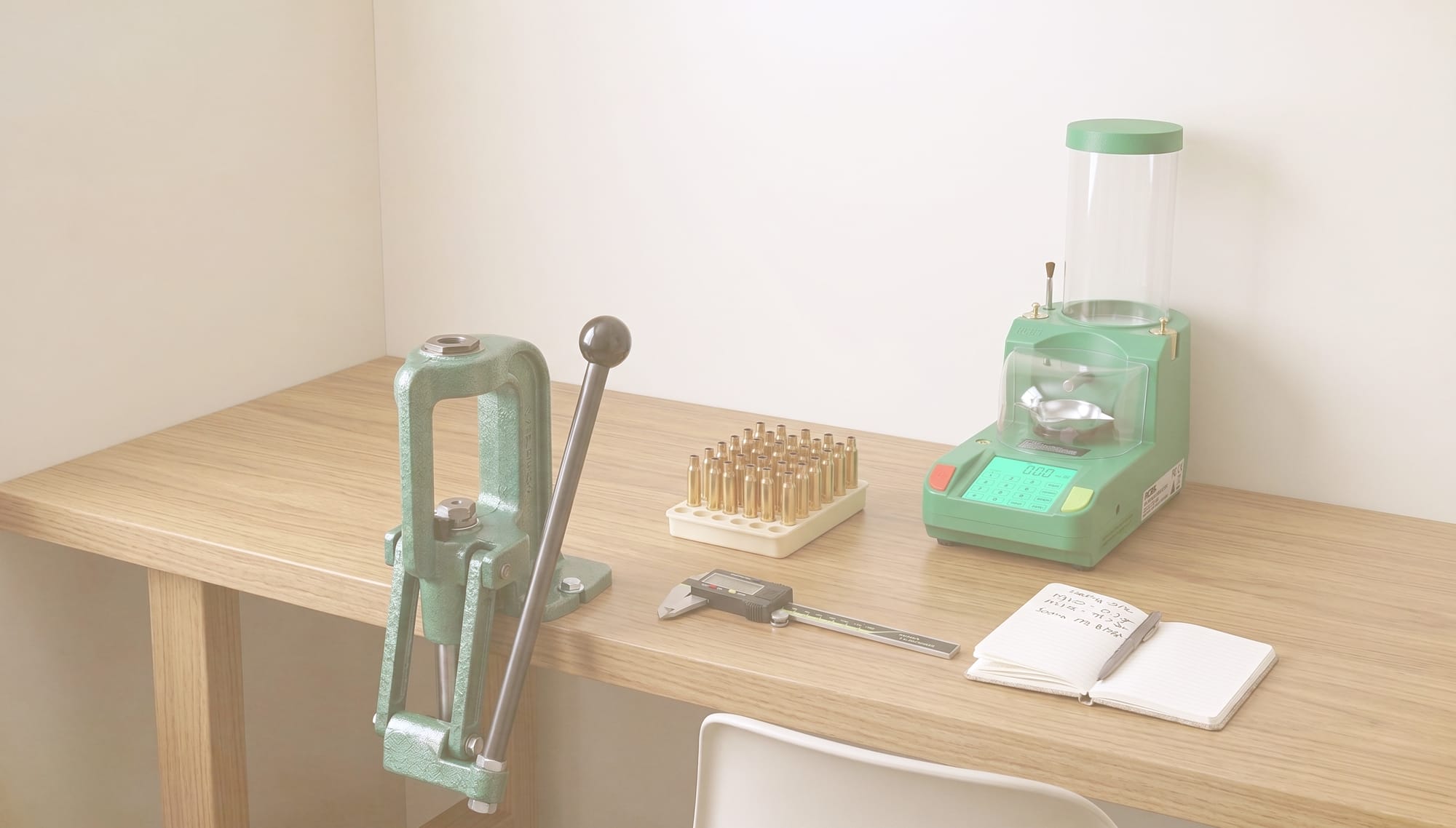
- If you are going precision: skip the kit. Buy the best bolt-action chassis you can afford in 308 Winchester or 6.5 Creedmoor, a modest scope, and a handloading press. Put the Starter Kit money into components and range time.
- If you are going shotgun sport: skip the rimfire and the SKS. One good over-under or sporting-clays gun, shot a lot, will do more for you than three firearms and a split focus.
- If you are going big-game hunting: skip the SKS. Start with a proper bolt-action in a Canadian-north calibre, a proper optic, a rangefinder, and a real pack-and-boots setup.
- If you are genuinely a generalist, meaning Saturday rimfire with a niece and Sunday clays with friends, the Starter Kit is fine. Even then, buy rifles that shoulder well for you, not the ones with the most forum consensus behind them.
None of this is a claim that the Canadian Starter Kit is bad advice for everybody. It is default advice, given without any specific information about you. You have the specific information yourself. Use it.
The short version
Buy the shooter you want to be. Sell the rifles you do not enjoy. Don't wait for permission from a forum.
If your first rifle is a 10/22 and you love it for thirty years, that is a shooter's life well spent. If your first rifle is a 338 Lapua and you love that one for thirty years, same answer. The sport is wide enough for both, and for most things between.
The Canadian Starter Kit is one version of a first purchase. It is not the version. It is what the community says, repeated often enough to feel like a rule.
The kit is not wrong. It was just wrong for me. Your mileage, as they say, will vary.
Sources · editorial note
- RCMP, Canadian Firearms Program, non-restricted firearms classification and transfer rules (no restriction on private sale of non-restricted firearms between licenced Canadians)
- Firearms Act (S.C. 1995, c. 39), non-restricted transfer and acquisition provisions
- GunPost (gunpost.ca) listing observations, SKS pricing trajectory and current used asking prices, 2015 - April 2026
- Canadian Gun Nutz forum threads on first-firearm recommendations and SKS scarcity, 2015 - April 2026
- r/canadaguns recurring first-PAL and starter-pack threads, 2018 - 2026
- Retailer pricing observations: Bass Pro Canada, Cabela's Canada, Canadian Safety Source, Firearms Outlet Canada, April 2026
- Cadex Defence product documentation, CDX-33 Lite Hybrid specifications
- This piece is labelled Editorial (Personal). It is one shooter's account of finding his way into precision shooting and is not presented as advice. Responses and opposing accounts welcomed at The Dispatch.
Related Holdover Tools
Useful calculators and references from the same corner of the Holdover bench.
Source trail refreshed
This article was refreshed for accessibility and source discovery on 2026-05-20. The opinion has not been rewritten; this block keeps the source trail easier to inspect.
Primary source trail
- RCMP classes of firearms in Canada
- RCMP buying and selling/transferring firearms
- RCMP storing, transporting and displaying firearms
- Canadian PAL Pathway
Related Holdover references
Keep the range notes worth reading later.
If this piece has you thinking about range time, keep the notes useful enough to read later.
Use the Holdover Range Bench Log Card to record rifle, optic, ammunition, distance, weather, zero, group notes, correction, and next test without turning a range trip into a memory test.
Safety note: the card is a note-taking worksheet, not shooting instruction, load data, legal advice, or a substitute for range rules, official guidance, manufacturer manuals, or qualified instruction.