Wrong firearm delivered, *more work* than a refund
A wrong delivery can involve payment, dealer and registration records. Check what arrived, ask who recorded it, and preserve the card issuer’s deadlines.

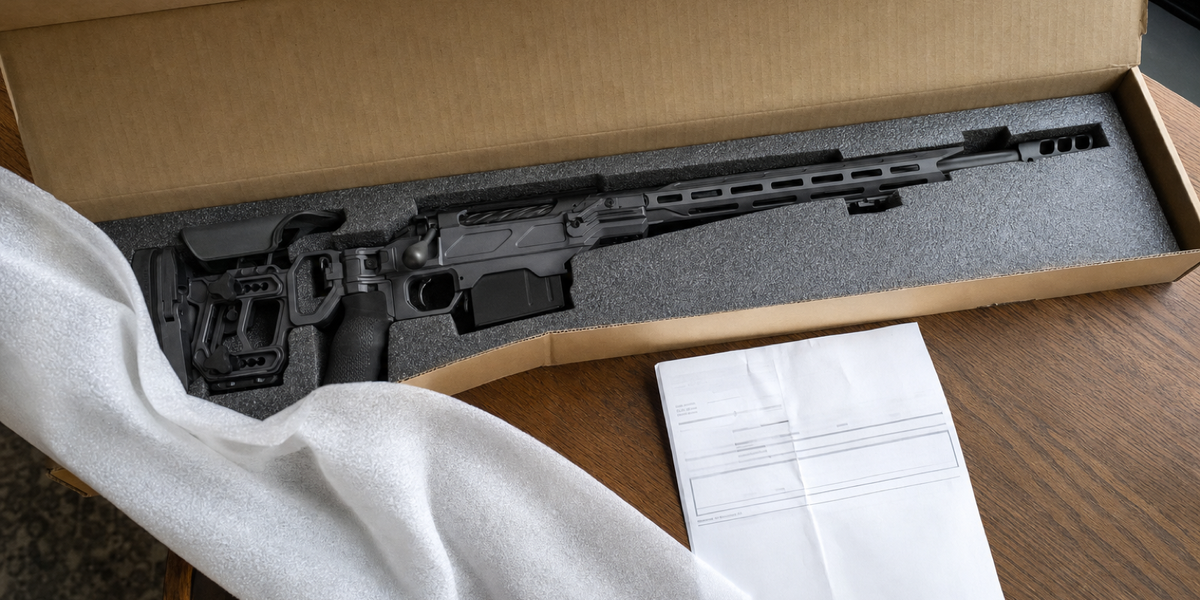
An online order for one firearm, a box containing another, and a retailer that stops answering. That was the account a poster shared on r/canadaguns on October 5. The poster said the store had acknowledged the mistake by email and wondered whether disputing the card charge would create trouble with the chief firearms officer or the RCMP.
The post supplies a question worth answering. It supplies no receipt, confirmed firearm classification or verified account from the retailer. The useful response begins with the records that could be involved: the payment, the dealer's firearm-specific record and, where registration applies, the registry. A successful refund can leave the other records needing attention.
My own rifle notes have included barrel length and configuration "to be confirmed on pickup." I can spend plenty of time comparing equipment and still have a basic detail waiting for the box to arrive. With a delivery mistake, that comparison becomes urgent. I would want to know what arrived, what the shop recorded and what my card issuer needs while there is still time to act.
What the reference number establishes
Before a non-restricted transfer, the seller must obtain a reference number from the Registrar of Firearms. The RCMP's transfer guidance describes it as confirmation that the buyer holds a licence and remains eligible to hold it. The number normally lasts 90 days, or until the licence expires if that happens sooner.
That check concerns the buyer's eligibility. Identifying the actual firearm takes you to a different part of the paperwork. The RCMP says non-restricted firearms generally require registration only in Quebec; restricted and prohibited firearms have federal registration requirements. The firearm's class and the owner's location therefore affect which records need checking.
Holdover has covered the seller's reference-number obligation. A delivery error adds another question: does the recorded firearm match the one that reached the buyer?
The shop's record names the firearm
Since May 18, 2022, businesses have had to retain sales and inventory records for non-restricted firearms. The RCMP's C-71 explanation says businesses hold those records and police require judicial authorization to obtain them.
Section 58.1 of the Firearms Act sets out the transfer record: the reference number and its issue date, the buyer's licence number, and the firearm's make, model, type and serial number, if any. The business must keep that information for 20 years from the transfer, or longer if regulations prescribe it.
The invoice gives you a starting point. Ask the retailer what it entered in its own record. Have it compare the ordered firearm, the delivered firearm and that entry, then explain the correction or return it proposes. Keep the acknowledgement and the agreed remedy in writing. A packing error and a recording error are separate possibilities, and the facts determine which needs fixing.
Registration adds another record holder
The RCMP's registration guidance explains that a certificate identifies a firearm and connects it to its owner. A restricted or prohibited transfer requires an updated record and a new certificate for the new owner. A mismatch between the delivered firearm and the certificate deserves an enquiry to the Canadian Firearms Program.
The CFP's published number is 1-800-731-4000. If the delivered firearm appears to fall outside your licence privileges, that is another reason to seek specific instructions promptly. A retailer's refund decision cannot establish your possession or transfer authority.
Quebec has its provincial registration system for non-restricted firearms. Owners dealing with a mismatch there can contact the Québec Firearms Registration Service, SIAF, at 1-888-335-9997. Explain the actual discrepancy rather than guessing which entry ought to change.
Ask the issuer about timing early
The Ombudsman for Banking Services and Investments describes chargebacks as a process involving the cardholder, financial institution and merchant. Most cardholder agreements require an attempt to resolve the problem with the merchant. The bank investigates, and any provisional credit can be reversed. OBSI handles complaints about financial institutions; a dispute directly with the retailer falls outside that role.
Scotiabank's dispute guidance, for example, includes merchandise that differs from its description. It asks for purchase and delivery information and details of attempts to resolve the problem. Its digital filing route has eligibility conditions, with telephone assistance for transactions outside those conditions. Your issuer's requirements and applicable deadlines need their own check.
I would make that enquiry while the retailer and any registry work through the records. Waiting for an unresponsive shop to finish everything can waste time the issuer expects you to use. Describe the purchase accurately and retain the emails, receipt and delivery evidence.
The published dispute pages do not answer the original poster's question about every circumstance in which information could reach firearms authorities. They provide no basis for a blanket reassurance. What they do establish is the issuer's payment-dispute role; the CFP, SIAF and retailer hold different information relevant to the firearm, where their respective record requirements apply.
A remedy that accounts for what arrived
The federal Complaint Roadmap recommends gathering records, approaching the business and putting the complaint in writing. Provincial and territorial consumer offices are another route when a dispute over goods remains unresolved.
For a wrong firearm delivery, useful evidence includes the order, packaging, identifying details of what arrived and the retailer's response. Ask for a clear proposed resolution and obtain the appropriate instructions before arranging movement or a return. The classification and transfer requirements still matter while the commercial dispute is being settled.
Licensed owners already have enough records to keep straight without inheriting a shop's packing mistake. I would judge the result by the complete resolution: money accounted for, the delivered firearm accounted for, and the relevant record holders having checked their entries. A credit on the statement can be welcome progress. It still leaves some calls to make.
Sources
- r/canadaguns: "online gun shop sent me the wrong firearm and are ghosting me now. what do i do?" (October 5, 2026)
- RCMP: Buying and selling (transferring) firearms
- RCMP: Former Bill C-71, what you need to know
- Firearms Act, section 58.1
- RCMP: Registration and verification of firearms
- RCMP: Contact the Canadian Firearms Program
- Québec: Firearms registration
- Québec: Contact the Québec Firearms Registration Service
- OBSI: Disputed credit card charges
- Scotiabank: Dispute a transaction or file a fraud claim
- Office of Consumer Affairs: The Complaint Roadmap
The amnesty file is still moving.
If this piece sent you back to government pages, do not wait for the next portal, Gazette, or court move to find you by accident.
The Dispatch follows Public Safety, RCMP, Canada Gazette, court, compensation, collection, and amnesty updates so the next change comes with the source that moved.
Safety note: the tracker is a worksheet for source hygiene, not legal advice or a substitute for current official guidance.